Face

Facelift

A facelift is a refined surgical procedure that restores balance and definition to the lower face, jawline and mid-face by lifting and supporting the deeper facial structure, known as the SMAS, rather than simply tightening the skin. Over time, this supportive layer gradually softens and descends, leading to jowls, loss of jawline definition, mid-face heaviness and neck laxity.

Facelift surgery may be suitable when these changes no longer respond to skincare or non-surgical treatments, and you are seeking a natural, refreshed appearance. Ideal candidates are in good health, have realistic expectations, and wish to look quietly rejuvenated — like themselves, simply well-rested.

Types of Facelift Procedures

Choosing the Right Technique

There is no single approach to facelift surgery. Each technique is carefully selected and tailored to the individual, with the aim of achieving results that feel natural, balanced and entirely your own.

Depending on facial anatomy, degree of ageing and personal goals, options may include:

  • SMAS plication facelift – addressing moderate facial descent with structural support
  • Deep-plane facelift – a comprehensive approach for advanced rejuvenation of the mid-face, jawline and neck

These techniques may also be combined with complementary procedures — such as eyelid surgery, brow lift or neck refinement — when considering wider facial rejuvenation. Each approach enhances facial structure subtly while preserving natural identity and expression.

For earlier changes, non-surgical lifting options may be discussed.


1. SMAS Plication Facelift

A SMAS facelift lifts the deeper supportive layer by folding and securing it (plicating) to restore the jawline and lower face.

  • Ideal for mild to moderate ageing changes
  • Excellent for improving jowls and jawline contour
  • Natural and reliable results
  • Shorter recovery than deeper techniques

This is one of the most commonly performed facelift approaches, offering meaningful improvement with controlled recovery.

2. Deep-Plane Facelift

A deep-plane facelift lifts the SMAS and skin as a single unit, releasing deeper retaining ligaments for a more powerful and natural lift.

  • Suitable for more advanced ageing or heavier tissue descent
  • Particularly effective for mid-face rejuvenation
  • Longer-lasting structural improvement
  • Longer recovery period

This technique offers significant rejuvenation while maintaining a soft, un-operated appearance.

3. Other Facelift Variations

Depending on your needs, other options include:

  • Mini facelift – for early laxity with reduced downtime
  • MACS lift – minimal access facelift with vertical vectors
  • Extended SMAS lift – for more comprehensive support
  • Facelift combined with neck lift – for those with neck bands or laxity

Consultation & Personalised Planning

Your consultation includes a detailed assessment of facial structure, tissue support, skin quality and individual ageing patterns. Together, we will discuss:

  • Concerns such as jowls, jawline definition, mid-face descent and neck contour
  • The most appropriate technique: thread lift, SMAS facelift or deep-plane facelift
  • Incision placement and the approach best suited to your anatomy
  • Expected recovery, downtime and realistic outcomes

The aim is to create a personalised plan focused on safety, harmony and long-term rejuvenation.

Procedure time

Approximately 60 minutes per session


Anaesthetic

Local anaesthetic


Type of treatment

Out-patient, one treatment session typically


Back to normal activity

Often within 2-3 days


Full recovery

Up to 14 days for skin and tissues to adapt fully


Duration of results

Many patients anticipate 3-5 years (or more) before gradual softening


Typical risks & side-effects

Bruising, swelling, mild discomfort/headache, skin bunching, rare infection

Final Results

As swelling settles, the face appears fresher, smoother and more defined, with improved jawline clarity and mid-face contour. Over the following months, the tissues soften and refine, revealing a natural, elegant result.

  • Early refinement: 3–6 weeks
  • Final results: 3–6 months
  • Longevity: Several years, depending on skin quality, lifestyle and ageing
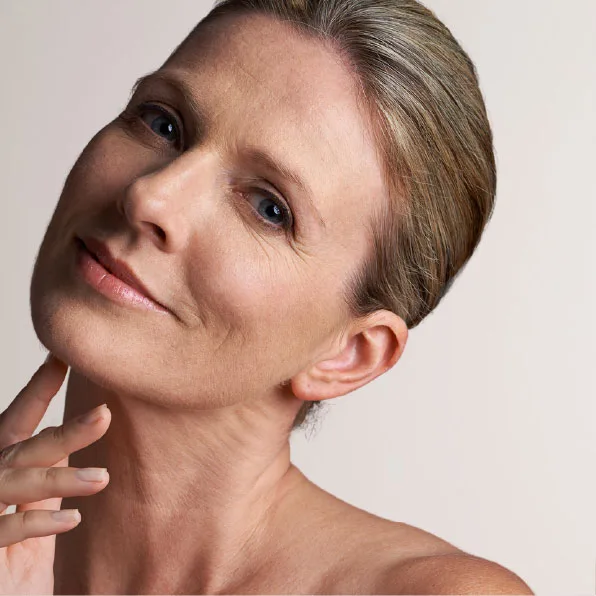
Refined, Natural, Timeless

A well-performed facelift restores structure and balance without altering who you are. The cheeks sit higher, the jawline becomes clearer, and the overall profile is more sculpted yet soft. Ongoing skincare, sun protection and occasional non-surgical treatments can help maintain results over time.

  • 1. Who is suitable for a facelift?

    A facelift may be suitable if you are noticing jowls, loss of jawline definition, mid-face heaviness, or neck laxity that no longer responds to skincare or non-surgical treatments. The best candidates are in good health, have realistic expectations, and want a natural, refreshed appearance rather than a dramatic change.

  • 2. Will a facelift make me look unnatural?

    No. A well-performed facelift restores your natural contours rather than changing your features. My approach focuses on lifting the deeper structures, not pulling the skin, ensuring a soft, elegant, and unoperated appearance.

  • 3. What age is best for a facelift?

    There is no “perfect” age.
    • Thread lifts are popular in the 30s–40s
    • SMAS or mini facelifts in the 40s–50s
    • Deep-plane facelifts are common in the 50s–70s, and sometimes earlier

    The right time is when ageing changes begin to affect your confidence and you are ready for a longer-lasting solution.

  • 4. What’s the difference between a SMAS facelift and a deep-plane facelift?

    A SMAS facelift tightens and repositions the supportive layer through folding or plication.
    A deep-plane facelift lifts the skin and SMAS together, releasing deeper ligaments for a more powerful and natural mid-face lift.

    Both can achieve beautiful results; the choice depends on your anatomy and goals.

  • 5. Do I need a neck lift as well?

    If you have neck bands, loose skin, or fullness under the chin, combining a facelift with a neck lift often delivers the most harmonious result. This will be discussed during your consultation.

  • 6. How long do facelift results last?

    Most surgical facelift results last 7–15 years, depending on genetics, lifestyle, and skin quality. A deep-plane facelift often lasts longer because the deeper structures are repositioned. Thread lifts typically last 3–5 years.

  • 7. Is the recovery from a facelift painful?

    Discomfort is usually mild and well-controlled with simple pain relief. The face may feel tight or heavy for the first week, which is entirely normal. Most patients say recovery is easier than expected.

  • 8. How long is the downtime after a facelift?

    • Thread lift: 2–5 days of downtime
    • Mini or SMAS facelift: 10–14 days
    • Deep-plane facelift: 14–21 days

    Most patients return to social activities comfortably by 3–4 weeks.

  • 9. When can I return to work?

    This depends on your procedure:
    • Office-based work: 10–14 days
    • Public-facing roles: 2–3 weeks
    • Strenuous or physical work: 4–6 weeks

  • 10. When can I exercise again?

    Light walking is encouraged immediately.
    Avoid strenuous activity, gym workouts, or high-impact exercise for 6 weeks.

  • 11. Will there be visible scars?

    Incisions are placed carefully along the natural creases of the ear and hairline. Once healed, they usually fade into fine, discreet lines. With scar care and sun protection, they often become barely visible.

  • 12. How long before I see the final result?

    • Early improvement: 3–6 weeks
    • Refinement: 6–12 weeks
    • Final result: 3–6 months

    The face gradually softens into a natural, refreshed contour.

  • 13. Can a facelift be combined with other procedures?

    Yes. Common combinations include:

    • Neck lift
    • Upper or lower eyelid lift (blepharoplasty)
    • Fat transfer to the face
    • Lip lift
    • Skin resurfacing or medical-grade skincare

    Combining procedures can enhance overall balance and reduce total downtime.

  • 14. Is a facelift safe?

    All surgery carries risk, but facelifts performed in accredited hospitals with experienced surgical and anaesthetic teams are considered safe. All risks — including rare ones such as bleeding or nerve injury — are discussed clearly during your consultation.

  • 15. Will I need drains or a bandage?

    Some facelift techniques require small drains for 24 hours; others do not. A light supportive dressing is often used initially, then replaced with minimal tape or none at all.

  • 16. How do I maintain my facelift results?

    • Good skincare and sun protection
    • Maintaining a stable weight
    • Occasional injectable treatments (if desired)
    • Non-surgical treatments such as skin boosters or peels

    These help support collagen and prolong the longevity of your result.

  • 17. When can I drive after a facelift?

    • Thread lift: 3–5 days
    • Surgical facelift: 7–10 days, once you are off prescription pain medication and feel comfortable turning your head safely.

  • 18. Do you offer non-surgical alternatives?

    Yes — for patients not ready for surgery, alternatives include:
    • Thread lifts
    • Skin boosters
    • Anti-wrinkle injections
    • Medical-grade skincare

    These can soften early ageing and complement surgical results.

  • 19. What if I’ve had previous facelift surgery?

    Revision facelift surgery is possible and often very effective. Your consultation will include a detailed assessment of skin quality, anatomy, previous scars and available options.

  • 20. Do men get facelifts too?

    Absolutely. Facelifts for men are increasingly common and require tailored planning to preserve natural masculine features. Techniques, incision placement and recovery advice are adapted accordingly.

  • 21. When can I apply makeup after a facelift?

    Most patients can begin applying light makeup after 7–10 days, once the initial healing has settled and the incisions are no longer sensitive. Avoid applying makeup directly over the incision lines until around 2 weeks, and only when advised at your follow-up appointment. Mineral or gentle, non-comedogenic products are best in the early stages. Your skin may feel slightly delicate, so I encourage a light touch and careful cleansing. As the weeks go by, you’ll find makeup sits more smoothly as swelling continues to settle and your contours refine.

Doctify - Great Patient Experience

Get in Touch

Contact us